British flowers follow the light and the weather, not a catalogue. A mild spring can bring tulips early, and a cold one can hold them back by a fortnight. This is a general guide to what our growers are cutting through the year, and what you are likely to find in a Larkspur bouquet.
Spring: March to May
March is the turning point. Daffodils, narcissi and the first tulips come through, followed by ranunculus, anemones and hyacinths. April brings forget-me-nots, wallflowers and the first sweet williams, and May is one of the loveliest months of the year, with alliums, aquilegia, bearded iris and the first of the peonies. Spring bouquets tend to be lighter and more delicate, so they suit short vases and quiet corners. The weather decides the exact week, so a bunch of tulips in early March may be Dutch rather than British, and we will always tell you which.
Early summer: June and July
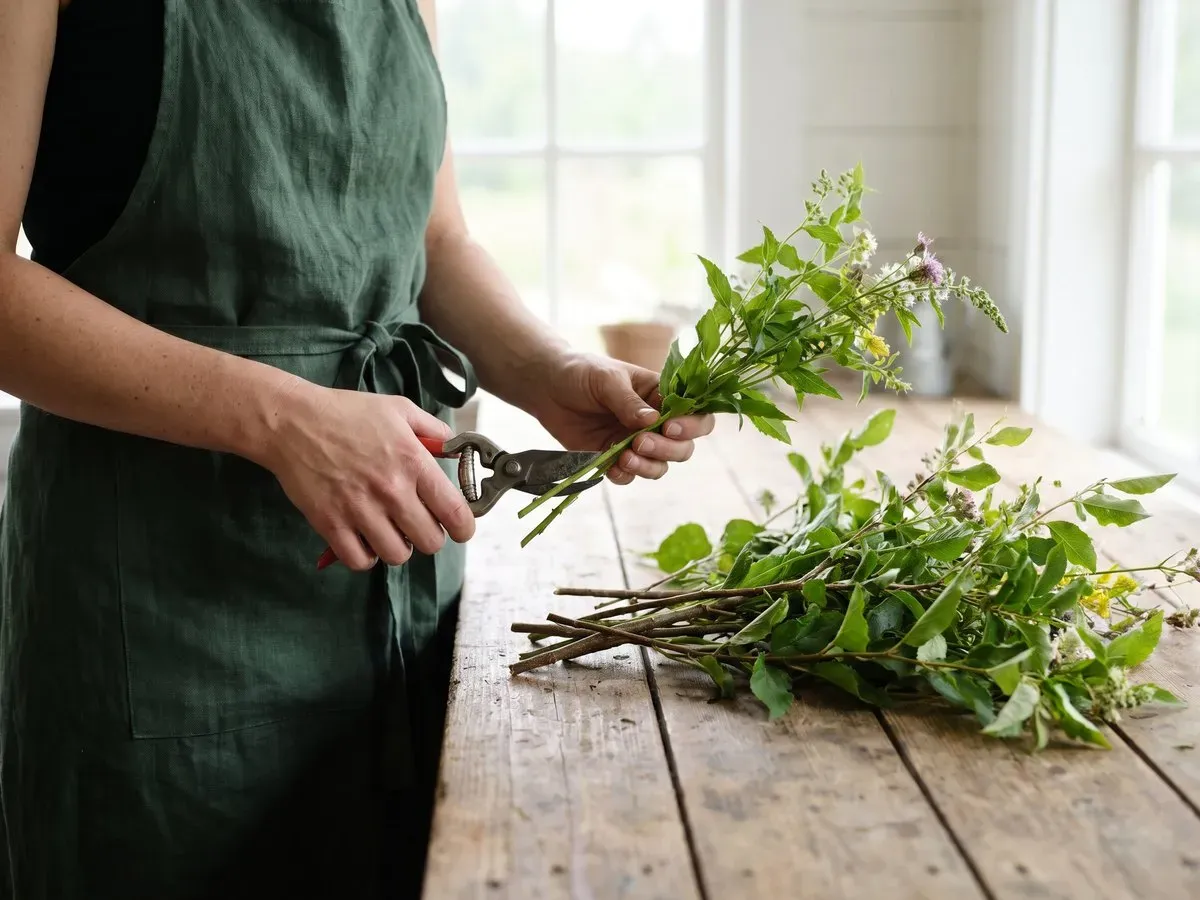
June is sweet pea season, and the scent fills the studio. Peonies are at their best from late May into June, and stocks, cornflowers, nigella and scabious arrive alongside them. By July the borders are full, with cosmos, larkspur, delphiniums, phlox and the first dahlias. This is the busiest time for our growers, and the widest choice of the year. Sweet peas are best picked often, which is why a bunch from a good grower lasts so well at home.
Late summer and autumn: August to October
Dahlias carry the late summer, in every colour from deep burgundy to pale apricot. Sunflowers, zinnias, rudbeckia and the first seed heads appear, then the season slows into September with asters, sedum, hydrangea and grasses. October brings berries, foliage and the last of the dahlias before the first frosts. It is a generous season, and the colours are stronger than at any other time of year.
Winter: November to February
British-grown stems thin out as the light goes. You will still find foliage, skimmia, ivy, berries and hardy stems, but from November much of what we use comes from Dutch growers, and we say so on the product page. Winter is the season for amaryllis, hyacinths and forced bulbs, plus the evergreens that give a bouquet its shape. Amaryllis and hyacinths are often forced in pots, and they bring a little scent and colour to the shortest days.
At a glance, the British year runs like this.
- British-grown flowers are available from March to November, with Dutch-grown stems filling the winter months.
- Spring is tulips, ranunculus and the first peonies.
- High summer is sweet peas, stocks, cosmos and dahlias.
- Autumn is dahlias, berries and foliage.
- Winter is amaryllis, hyacinths, evergreens and imported stems.
We buy what is good that week rather than what is on a fixed list, so a bouquet may change slightly from one order to the next. That is part of the pleasure of seasonal flowers. If you are sending for a particular date, order a little ahead and we will use the best of what the growers have. Every order includes a hand-written card, so you can say what the flowers are for, and the card will be there when they arrive. Late winter is the quietest point, and the imported stems we use then are chosen for scent and shape rather than for a British label.