When someone dies, flowers are one of the few things you can do that needs no explanation. They say that you are thinking of the family, and they give the person who receives them something gentle to look at. Choosing them does not have to be difficult.
Keep it calm
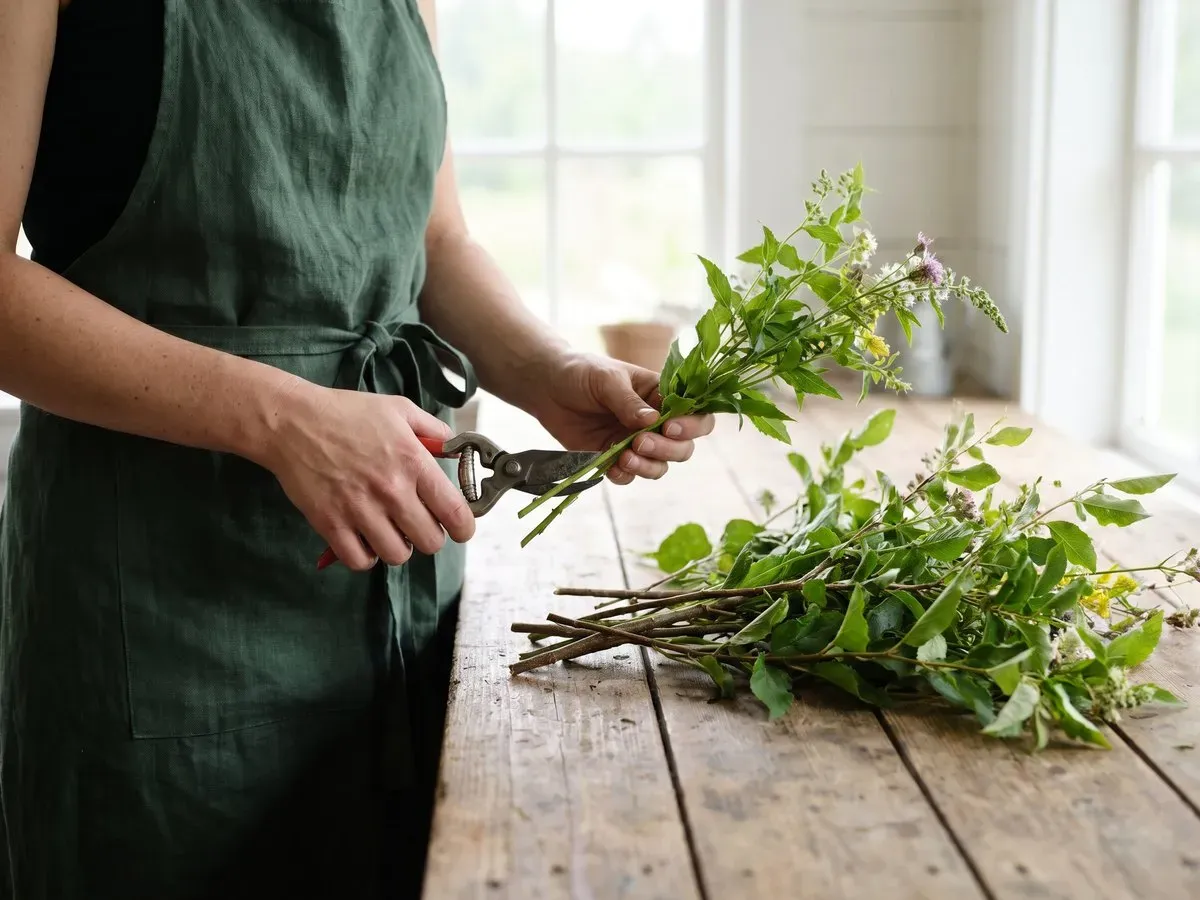
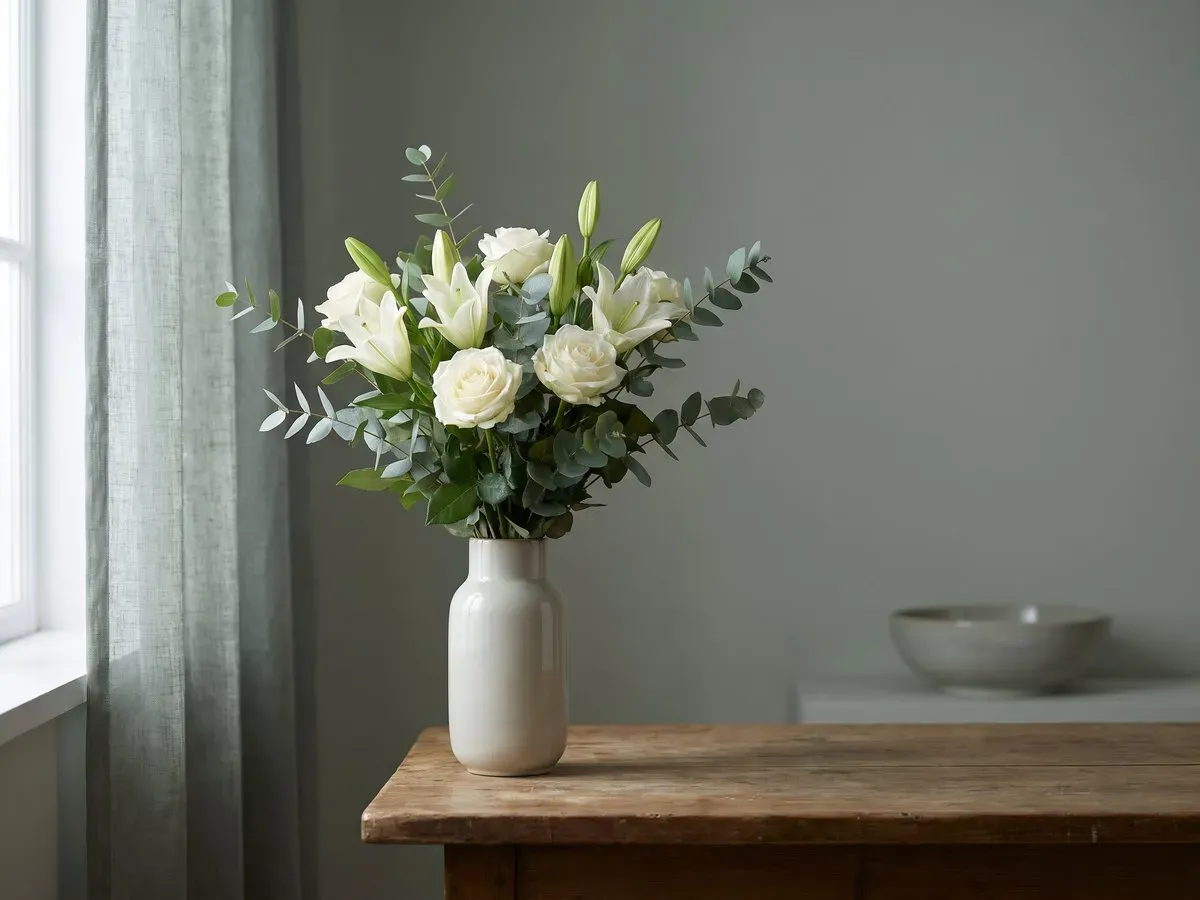
Whites, soft greens, blues and pale pinks are the usual choice for sympathy, and they sit well in most homes. White Garden is a quiet mix of white and green stems, and Meadow Morning is looser and softer, with pale flowers and plenty of foliage. Both are easy to place on a hall table or a windowsill. If you knew the person's taste, choose with that in mind rather than following a rule. Scent is worth thinking about too. A strongly scented bouquet can be too much in a small room, so choose something softer if you are unsure.
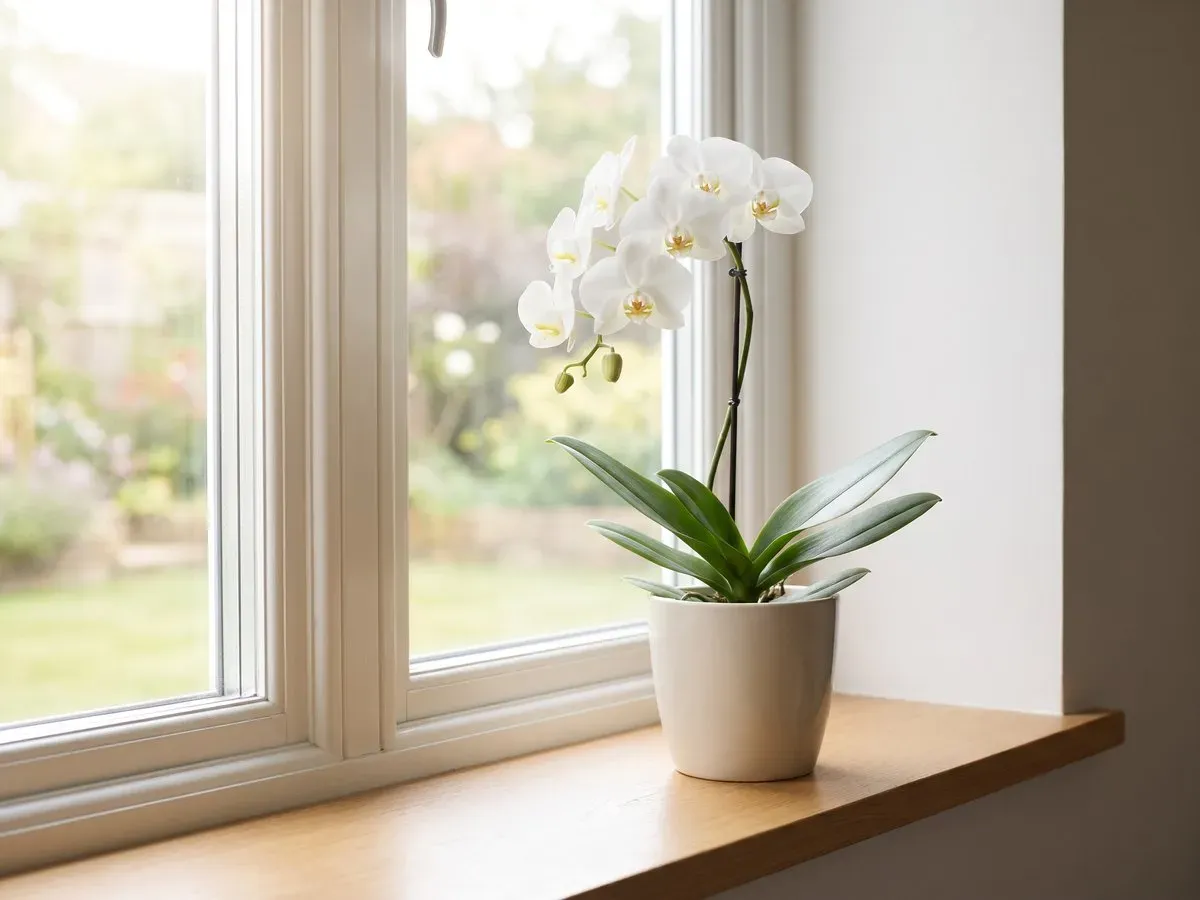
A plant can be a thoughtful alternative, because it lasts and can be kept after the service. The Moth Orchid, in its ceramic pot, needs little attention and flowers for a long time, which many families appreciate in the weeks that follow.
Mind the size and the timing
A large arrangement can be hard to manage in a small house or a hospital room, so it is worth thinking about where the flowers will go. A hand-tied bouquet that arrives in water is the simplest choice, because it needs no arranging. If you are sending to a funeral director or a place of worship, add the address and any instructions to the card message in your basket, and we will follow them. We deliver Tuesday to Saturday, and you can ask us to hold an order for a later day in the card message. If you are not sure of the address, send the flowers to the family home rather than to the funeral director, so that someone can take them in.
What to write on the card
Every order includes a hand-written card, and a few honest words are enough. You do not need to explain or console. Write as you would speak.
- Say who the flowers are from, using full names if the family may not know you well.
- Name the person who has died, if it feels right: "Thinking of you all, and of Margaret."
- Offer something practical: "We are nearby if you need anything."
- Keep it short. One or two sentences is plenty.
- Sign it clearly, and add a phone number only if the family already has it.
Avoid guessing at how someone feels, and avoid anything that promises they will soon feel better. "I am so sorry" and "thinking of you" are never wrong.
A small note on the day
If you are unsure whether flowers are appropriate, they almost always are. If the family has asked for donations instead, you can still send a small bouquet to the home, or choose something for the room where people will gather. We write every card by hand, so take your time with the message and leave your name on it. A short, plain note is remembered long after the flowers have gone.