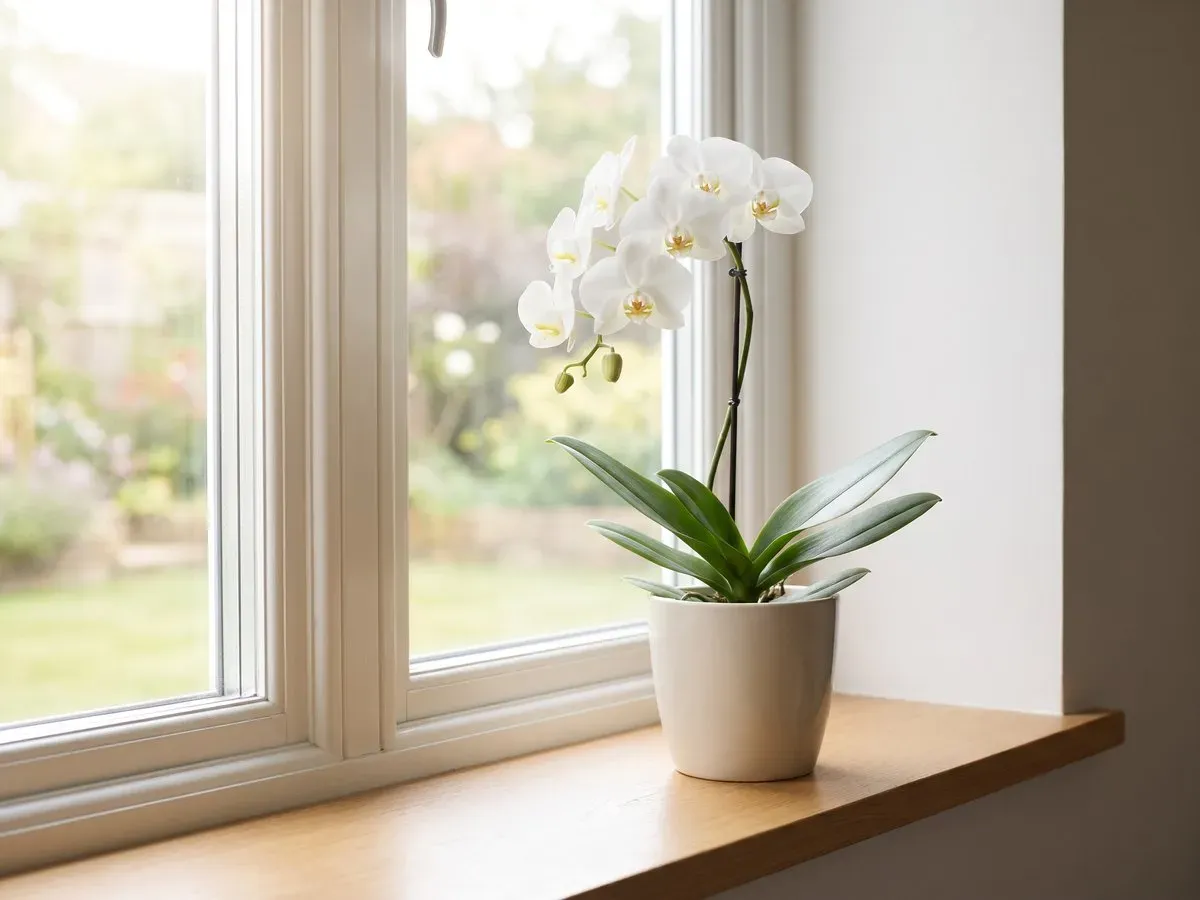
The moth orchid, or phalaenopsis, is one of the easiest houseplants to keep, and one of the most rewarding. A healthy plant can flower for two or three months at a time, rest for a while, and then send up a new spike. The Moth Orchid we sell arrives in a ceramic pot and needs only a few things done well.
Light and warmth
Give it bright, indirect light, such as a few feet back from a south or east window. Direct summer sun can scorch the leaves, and a dark corner will stop it flowering. Normal room warmth suits it, around 18 to 24 degrees, and it dislikes cold draughts. Keep it away from radiators and from windows that get very cold at night. In summer, move it a little further from the glass, and in winter give it the brightest spot you have.
Watering, carefully
Most moth orchids are lost to too much water rather than too little. Water when the top of the bark feels dry, roughly once a week, and let the water drain away completely. Never leave the pot standing in water. If the roots inside the clear inner pot are green, the plant is happy, and if they are silvery, it is ready for a drink. Use room-temperature water and avoid getting it into the crown, where the leaves meet. If the bark stays wet for days, leave it longer between drinks. It is better to let the plant dry a little than to keep it constantly damp.
A few habits that help
- Water in the morning, so any splashes dry before night.
- Let the pot drain fully and never leave it in a saucer of water.
- Feed with a weak orchid feed every second or third watering in spring and summer.
- Wipe dust from the leaves with a soft, damp cloth.
- Keep it away from fruit, which can speed up the fading of flowers.
After the flowers fade
When the last flower drops, cut the flower spike about a centimetre above the second node, the small bump on the stem. Some plants will send out a side spike and flower again sooner. Others prefer to rest, and a new spike will come from the base in its own time. Keep watering and feeding through the rest period, and move the plant somewhere slightly cooler at night in autumn, which often encourages a new spike.
Repot every two years or so, in a bark mix made for orchids, not ordinary compost. The roots need air, and a tight pot is better than a large one. If the leaves go soft and wrinkled, or the roots turn brown and hollow, check the watering first before changing anything else. A plant that has been overwatered will often recover if you let the bark dry out and keep it warm.
An orchid is a slow plant, and that is part of its charm. Given steady light, careful water and a little patience, it will flower for months and come back again the following year. It is a good plant for a bathroom or a bright kitchen, where the air is warm and the light is soft.